Lung cancer is the third most common cancer in the U.S. and causes more deaths than any other cancer.
World Lung Cancer Day is observed every year to raise awareness about the importance of preventing lung cancer and to support ongoing research efforts that may one day lead to new, effective treatments for lung cancer.
In honor of World Lung Cancer Day, we would like to share and highlight the benefits of home care and hospice services for patients living with lung cancer.
World Lung Cancer Day occurs every year on August 1. Since its inception in 2012, healthcare providers around the globe have devoted their time on August 1 to sharing important facts and statistics about lung cancer, and to encouraging people to receive early screening for this disease.
There are several steps you can take as a medical professional to raise awareness surrounding World Lung Cancer Day.

Smoking is the number one cause of lung cancer, as nearly nine in 10 lung cancer cases are caused by smoking cigarettes. If your patients smoke, tell them about the many effective treatments for smoking cessation, such as medications and nicotine replacement. Other lung cancer risk factors are exposure to radon and secondhand smoke.
Patients at high risk for lung cancer can now undergo a low-dose CT scan that can detect early disease. High-risk patients for lung cancer are between 50 to 80 years old, have a 20-pack-year history of smoking (the equivalent of smoking one pack/day for 20 years), are current smokers, or have quit smoking at some point within the last 15 years. Tell any patients who meet these risk factors about the importance of lung cancer screening and encourage them to make an appointment.
The American Lung Association recommends personally contacting your elected officials in Congress and asking them to support additional lung cancer-related research. Government-funded medical studies can pave the way for future cures and treatments for lung cancer that can potentially save thousands of lives per year.
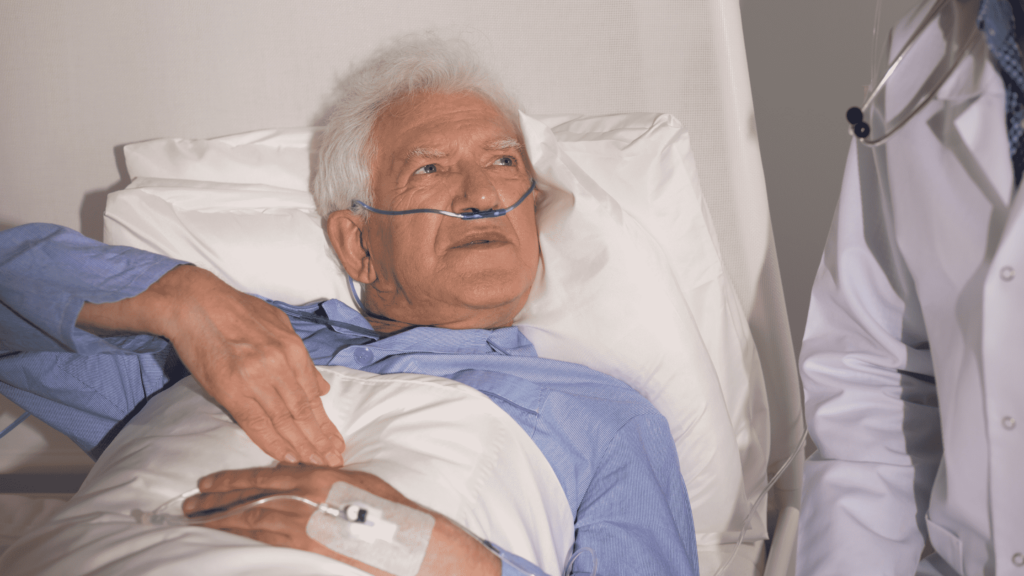
Another important step you can take to promote World Lung Cancer Day is to refer qualifying lung cancer patients to home health and hospice care.
Lung cancer patients in recovery or remission may benefit greatly from home health services. Home health can help patients live more comfortably with their condition while receiving quality care in the privacy of their own homes. Home health can significantly improve the quality of life of patients who are living with lung cancer.
Patients with terminal lung cancer may benefit from hospice care services that focus on reducing symptoms of end-stage lung cancer. Hospice care allows patients to spend more quality time with their loved ones and make final arrangements as desired.
We understand how overwhelming it can be for patients to navigate and choose a quality home health and hospice care provider. As a healthcare professional, you can ease this burden by referring your patients to our team and guiding them through their transition of care.
Contact us today to speak with one of our representatives to learn more about our many services.
https://www.cdc.gov/cancer/lung/statistics/index.htm
https://www.cdc.gov/cancer/dcpc/resources/features/lungcancer/index.htm
https://www.lung.org/lung-force/about-lung-force/featured-campaigns/world-lung-cancer-day
When it comes to dealing with grief, there’s no one-size-fits-all approach. Everyone grieves differently, and grief can affect individuals, families, and a person’s entire social circle. The grieving process can be especially complicated for those who are homebound or on hospice with a terminal illness.
Creating a plan of care for hospice patients must also incorporate grief. By including grief in an individual’s plan of care, we are able to meet the holistic needs of patients and support them throughout the process.

Hospice care is focused on supporting patients with terminal illnesses to be as comfortable and pain-free as possible. When an individual is put on hospice, grief can occur both personally and for family members. Many families of patients experience anticipatory grief before an impending loss. This type of grief can cause individuals to feel many unexpected emotions: fear, sadness, loneliness, anger, and more.
Coping with grief can look different for every patient and family member. What brings one person comfort may not help another.
Creating a personalized hospice care plan is one of the ways our hospice team can help support individuals and their families experiencing grief. From providing emotional support to additional resources, there are many ways hospice care can support grieving individuals.

To take things a step further, we offer a helpful bereavement program, which can support families during a difficult time in their lives. We provide one-on-one support, supportive phone calls and in-home support sessions to help each individual manage the grieving process and begin their healing process.
Whether you’re grieving a change in abilities or the loss of a loved one, each person’s grieving process is entirely unique. We incorporate grief into the plan of care for both hospice patients and their families To learn more, contact us anytime to learn more about how our hospice care can help support you and your loved ones through any stage of grief.
We don’t often think about the importance of staying hydrated. We may go for hours and hours without a sip. We may wait until we’re thirsty to get a drink.
Generally, you should drink ⅓ of your weight (in pounds) in ounces of water daily. For example, if you weigh 150 pounds, drink 50 ounces of water (or other hydrating beverages) daily.
Many health problems and medications can affect the amount of water we need, so it’s best to talk with your doctor about your specific needs.

As we get older, our ability to regulate the amount of water in our body declines. What’s more, our lifestyle and habits may change over time. We may have been more active, naturally drinking more water. But now we don’t exercise as much or at high intensity.
We may have commuted to work every day with a drink in the cup holder. We sat at our desks with a tumbler of water within reach, a constant reminder to take a drink.
For seniors, we need to maintain a 55% level of water in our bodies. Dehydration, even in mild cases, can harm health and exacerbate existing medical conditions. Symptoms like confusion, dizziness, fatigue, joint pain and constipation can result from inadequate hydration.
The importance of staying hydrated extends beyond everyday life for seniors. It becomes even more critical when recovering from an illness, injury, or medical procedure. During these times, the body requires additional support to heal and regain strength and adequate hydration plays a vital role.
Some of the ways hydration helps you heal include:

Many of us take multiple medications, some of which may cause an increase in urination. What’s more, many chronic health conditions, like diabetes and kidney disease, can contribute to this loss of fluids. Losing too much fluid is even more dangerous in summer.
During the hotter months, the combination of higher temperatures and perspiration can lead to a greater risk of dehydration. Heat-related illnesses like heat exhaustion and heat stroke are also more common in seniors and can be life-threatening.
Look for shade, go into an air-conditioned building, and avoid prolonged exposure to heat and sun when temperatures and humidity rise.
Drinking enough water isn’t the only way to prevent dehydration. Other hydrating beverages and foods are also options.
Foods like fruits and vegetables with high water content can help also us stay hydrated: strawberries, tomatoes, watermelon, celery, and cucumbers. Beverages like herbal teas can increase hydration too. But it’s essential to limit caffeine and alcohol. They can have a diuretic effect.
Remember that staying hydrated is important at any age but is critical for seniors. Staying hydrated gives our bodies the necessary support to heal, manage medications, boost immune function and regain energy and mobility. Be sure to talk with your doctor about their hydration recommendations for your needs.
References:
https://www.ncbi.nlm.nih.gov/pmc/articles/PMC2908954/
https://www.ncoa.org/article/how-to-stay-hydrated-for-better-health
Regardless of sexual orientation, gender identity, or who you love, everyone deserves to feel safe receiving the care they need. For LGBTQ+ folks, hospice care can look different than it often does for cisgender, heterosexual people. As a healthcare care provider, we take the time to understand patients’ personal needs and guide them through their journey with patient-centered, inclusive practices.
A 2018 AARP study showed that 60% of LGBTQ+ people worry about a lack of sensitivity in their healthcare. Having multiple barriers to high-quality healthcare, such as poverty, racism, disability, and location, can also make it more challenging to find a provider who can meet their needs.
To practice equality in healthcare, everyone should receive care tailored to their needs and get information that will help them most according to those needs. Making hospice care more accessible to marginalized groups, like LGBTQ+ people, means we must understand their experiences beyond physical symptoms, too.

Inclusive care in a hospice setting involves treating each patient individually while validating the varied parts of their identity and taking the time to learn about the unique experiences within the LGBTQ+ community. It can be as simple as using the person’s correct name and pronouns and treating them with the same respect you would for any straight, cisgender patient.
Many LGBTQ+ patients have “found family” involved in their care instead of, or in addition to, blood relatives to support them. Additionally, if the patient wants spiritual guidance, a hospice care provider should be able to help find an LGTBQ+ friendly chaplain and other supportive resources that respect the person’s identity and wishes. Plus, showing sensitivity about the patient’s previous healthcare experiences can help them feel more comfortable receiving care from their current provider.
Healthcare focused on equality creates a broader understanding of diverse experiences that allow providers to offer specific care and help patients with thorough knowledge. It gives patients and their families more support and well-rounded information that applies specifically to them.
Many LGBTQ+ patients have their symptoms and concerns dismissed or devalued in typical medical settings. As a result, many are reluctant to share their needs or experiences for fear of discrimination. When we as providers understand this reality, we can help the LGBTQ+ community feel safer receiving hospice care. It ensures that patients have to do less work to be understood and receive the necessary care, especially while healing or going through the hospice journey.

By validating and including patients’ identities and being mindful of them in their care, providers give loved ones the space to be with the patient while they receive care. While communication between patients, providers, and others involved in care is important, having a provider who understands that the LGBTQ+ community has unique needs and struggles reduces the burden on patients.
We focus on healing, support, and balance between offering physical care and emotional healing. We want our patients to feel comfortable asking difficult questions, sharing their experiences, and knowing they have someone who will listen to and advocate for their needs. We know how overwhelming hospice can feel for many LGBTQ+ patients and their loved ones, and to us, inclusivity means providing care that reduces anxieties and makes end-of-life transitions as comfortable as possible.
Our care is all about love and healing, whether that be physical pain or emotional support. By presenting all options and giving patients control, we offer excellent palliative care that extends to emotional, mental, and spiritual needs.
Please contact us to learn more about how we provide equitable, compassionate hospice care.
References
Watching someone you love suffer from Alzheimer’s or another memory debilitating illness is incredibly difficult, and it can be even more challenging to decide when it’s time to consider hospice care. Here, we are sharing five signs it may be the right time to consider the extra support of hospice care for an Alzheimer’s patient.
The Functional Assessment Staging (FAST) Scale is a tool used to determine if changes in a patient’s condition are related to Alzheimer’s disease or another condition. If due to Alzheimer’s, the changes will occur in sequential order. Alzheimer’s disease-related changes do not skip FAST stages.
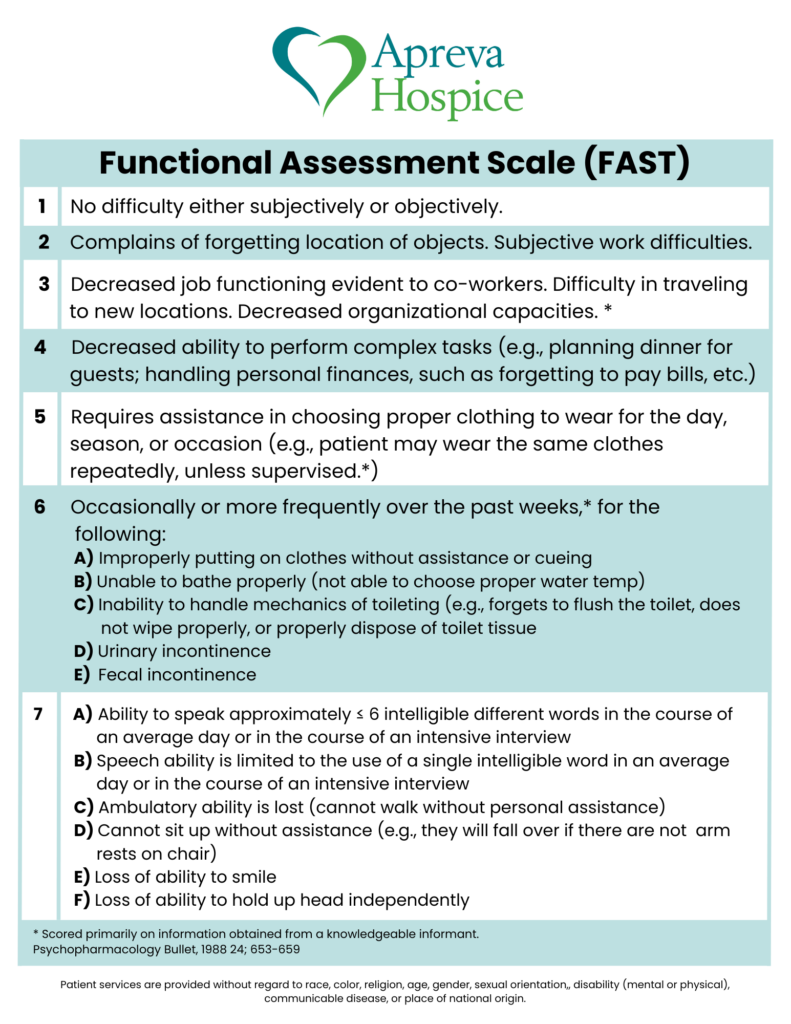
This means a person is no longer able to get around on their own. For example, they require assistance getting from room to room.
Without assistance, you may notice they put their shoes on the wrong feet or their day-time ‘street’ clothes on over their pajamas. They are also unable to bathe without assistance.
This includes urinary or fecal incontinence or both.
This may begin as the patient only saying 5-6 words per day and gradually reduce to only speaking one word clearly until they can no longer speak or communicate at all. This will also include the inability to smile.

Hospice care is for patients with a life limiting illness and a life expectancy of six months or less. The main focus is to manage pain and symptoms and ultimately keep the patient comfortable. When you choose hospice for your loved one, their care team can help you to understand what to expect in the final stages of Alzheimer’s. They will also provide support to you and the rest of your family throughout the end-of-life process.
If you would like more information on hospice care for Alzheimer’s patients, please contact us. We are here to answer any questions you may have.
May marks Older Americans Month, a time to celebrate the lives and contributions of people ages 65 and older. Older Americans are living longer, more productive lives than ever before, and they constitute a growing segment of the U.S. population. According to the 2020 Census, more than 55 million people aged 65 and older live in America today, and those numbers will grow in the coming years. By 2030, every member of the Baby Boomer generation will be over 65. By 2040, 22% of the U.S. population will be over the age of 65.
Aging and retirement bring new opportunities for community and family engagement, but they can also bring new health concerns. As our older Americans age, they should know the options they have in their healthcare journey.

The majority of older adults prefer to live at home, even if they have health conditions that require frequent care. Home health care services allow individuals with long-term or chronic conditions or people recovering from an illness or injury to be in a comfortable, stress-free environment while still getting the support they need. Home care can be a short-term or long-term service. Choosing home health may prevent unnecessary hospitalizations in the future and speed up recovery.
Home health care services can be adapted to the individual’s needs. Home health provides work with the individual’s doctor to make a care plan. Each plan will be tailored to the health and well-being of the person receiving care. Our services ensure that the home environment is conducive to supporting the healthcare needs of older adults. Our care providers focus on the following:
Many families find that end-of-life care for a loved one comes with complex medical and emotional needs. Hospice care is a health service to address the needs of individuals and families facing a life-limiting illness. Hospice services can be delivered in the home so individuals can live their last days with respect, peace, and dignity in familiar surroundings.
A hospice care team includes a hospice volunteer, registered nurse, social worker, home health aide, and chaplain. The care team and the family determine the care plan, and hospice staff will work with families to make any necessary changes.

Our services are focused on managing pain and increasing comfort for the individual. In addition, hospice care offers resources for emotional and spiritual health, as well as managing the person’s physical needs. The hospice care team will also be available for family members who need support during this challenging time.
If you or a loved one needs care at home, you have many choices of home health and hospice providers. Only you and your family can know which provider is the right option for your needs. Your hospital or physician can advise you on your options, but the choice is ultimately up to you.
To learn more about the services we provide, contact us at 619-450-4414 .
In the United States, one in five adults will experience a mental illness in any given year. This includes a large number of people who are living with a terminal illness—and their caregivers—who must cope with facing the end of life and making the necessary arrangements.
May is Mental Health Awareness Month. As one of the country’s leading hospice providers, our team is devoted to connecting you with the care you need if you are living with a mental illness.

Mental Health Awareness Month was established in 1949 by Mental Health America. The goal of this observance is to help Americans understand the importance of achieving good mental health and to empower people with mental health issues to seek treatment. Mental Health Awareness Month is an opportune time to learn about the causes, symptoms, and treatments of various mental health disorders.
This year’s theme for Mental Health Awareness Month is “Look Around, Look Within.” It calls for Americans to focus on how one’s surroundings can impact their mental health. Specific topics that align with this year’s theme include:
If you can identify specific factors that may be impacting your mental health, it’s time to make changes to your surroundings that can get you on the path to feeling better. For example, if you have a serious, debilitating health condition affecting your ability to carry out normal everyday tasks, it may be time to seek assistance from a home health care provider.
Caring for your mental health is just as important as caring for your physical health. Experiencing mental health symptoms like sadness, depression, anxiety, and stress every day for a long period can affect your career, relationships, social life, and general well-being. An untreated mental illness can also increase your risk for a wide range of physical health problems including diabetes, stroke, and heart disease.
Unfortunately, stigma continues to surround mental illness and prevents many people with mental health problems from seeking the help they need to become healthier and improve their quality of life.
Mental health treatment can help you identify the factors in your life that are causing your symptoms and empower you to make changes that can reduce their impact on your mental well-being. If you are living with a terminal illness, seeking mental health treatment is especially important given how terminal illness places you at higher risk for anxiety and depression.

Having a terminal illness—such as cancer—is one of the top risk factors associated with mental illness. If you have a terminal illness or are caring for someone with a terminal illness, you may need help coping with certain treatments and with facing the end of life.
We offer hospice services that are personalized for every patient based on their mental, physical, spiritual, and emotional health needs—including mental health treatment. Counseling, bereavement, and support group therapy are some of the many mental health services offered by our hospice care providers. Our interdisciplinary teams are comprised of compassionate physicians, nurses, social workers, chaplains, and others who are dedicated to helping you and your loved ones navigate a terminal illness while caring for your mental health.
If you are suffering from a mental health issue, don’t hesitate to speak up and come to us with your concerns. We will be more than happy to connect you with the help and treatment you need and guide you and your loved ones toward finding the right treatments that can improve your quality of life.
Contact us today to speak with one of our representatives and learn more about our hospice and mental health services.
This May, join us in celebration of America’s 4.4 million registered nurses who make a touching difference in the lives of patients and their families. Exceptional nurses often have a true passion for helping others, backed by compassion and empathy.
In honor of this month, we express our appreciation for home health nurses, hospice nurses, and nurses who work in the skilled nursing facilities that partner with us as hospice and home health providers.
Nurses make a profound impact in improving the quality of life of individuals in skilled nursing facilities, hospice care, and home health care. We invite social workers, medical professionals, and anyone who has been touched by a nurse to celebrate Nurse Appreciation Month with us. This is your reminder to thank your nurses and show you appreciate their “special touch”.

Nurses working in skilled nursing facilities serve a vital role in helping individuals get back on their feet after an injury or illness. While in rehabilitative nursing care, patients are supported by nurses who are committed to helping them improve their quality of life and regain strength during recovery.
Often, it is because of the support from nurses in rehabilitative nursing care that individuals can safely return to their homes for ongoing support from home health nurses. This allows individuals to continue recovering from the comfort of their own homes.
Throughout the month of May, we also recognize and show we appreciate the exceptional home health nurses that support patients in their homes. Home health nurses play a vital role in supporting an individual’s road to recovery as they strive to regain independence and autonomy in the home. Home health staff support the holistic health of individuals beyond physical care by also providing social and emotional support.
Hospice nurses have a special role in the lives of patients diagnosed with a terminal illness and their families. Nurses providing end-of-life care through hospice services help reduce unnecessary pain and suffering, making individuals as comfortable as possible in their final months or days of life. In addition, hospice nurses generously share their skills and compassion to provide supportive care that improves an individual’s quality of life, developing strong bonds with patients and their families.

Often, hospice nurses go above and beyond the call of duty, showing exceptional compassion for those nearing the end of their life. Not only do hospice nurses support an individual’s wishes, but they also provide support resources for family and friends during difficult times. Most families never forget the lasting impact the nurses made during an incredibly challenging period in their life.
Nurses in skilled nursing facilities, hospice care, and home health nurses demonstrate admirable qualities such as compassion, patience, and empathy. On behalf of our team and our partners, we honor the champions that have dedicated their careers to improving the lives of others. We couldn’t do it without you!