By: Laura Mantine, MD
Chronic lung disease is the 4th most common cause of death among older adults in the United States. More than 3 million people worldwide died of COPD in 2015, representing 6% of all deaths that year. People dying from COPD frequently experience difficult and uncomfortable symptoms that lead to distress and panic. They commonly have disabling respiratory symptoms including severe breathlessness, limited tolerance for activity, and intractable coughing. They are also usually oxygen dependent, often experience anorexia with weight loss, cachexia, and ultimately become dependent on others for their activities of daily living.
Despite the symptomatic needs of individuals dying from end-stage COPD, only 30% of individuals receive hospice care before death. It is not clear why the rate of hospice use for patients with COPD is so low, but several explanations have been offered. The most important may be that few patients with severe COPD have discussed end-of-life planning with their clinician. Furthermore, many patients and clinicians do not view COPD as a terminal illness and feel it is more chronic in nature. Also, there may be a lack of awareness that patients enrolled in hospice can continue to receive treatments for COPD. Due to the fluctuating course of COPD, it is often difficult to accurately estimate a patient’s life expectancy which may contribute to low hospice utilization rates.
While end-of-life-care is an appropriate topic to discuss with all patients, several factors have been suggested that should prompt a discussion with patients who have severe COPD. One factor is simply that a clinician would not be surprised if a patient with COPD were to die within the next 6-12 months. A clinician should consider hospice referral in a patient with COPD if they are dyspneic at rest or with minimal exertion, have progressed to the point where they spend most of their days at home, have experienced repeated ED visits (one or more each quarter) due to infection or episodes of respiratory failure, have endured repeated hospitalizations (one or more each quarter) and no longer wish to be admitted and the patient no longer wishes to be intubated.
While these laboratory studies may be helpful to the clinician when considering patient appropriateness for hospice services, they are not required for patient admission.
COPD is a significant health issue around the world. It is ultimately a fatal disease and patients are under-referred to hospice care. Hospice, with its strong interdisciplinary approach, has been shown to improve quality of life for patients with end-stage respiratory disorders like COPD.
Hospice Eligibility for Patients with COPD. Serena J. Scott, MD, Barry D. Weiss, MD, Ellyn Lee, MD, College of Medicine, University of Arizona. https://uofazcenteronaging.com. June 2017.
When to refer patients with advanced COPD to palliative care services. Rebecca Strutt. Breathe (Sheff). 2020 Sep; 16(3): 200061.
Referral to palliative care in COPD and other chronic diseases: A population-based study. Kim Beernaert; Joachim Cohen; Luc Deliens; Dirk Devroey; Katrien Vanthomme; Koen Pardon; Lieve Van den Block. Respiratory Medicine. Volume 107. Issue 11, P1731-1739. November 1, 2013.

By: Laura Mantine, MD
It is a fact that only 25% of deaths occur at home while nearly 80% of Americans would prefer to die at home. Unfortunately, many individuals will die in hospitals, while receiving care that is not consistent with their wishes. It’s important for older adults to plan and let their caregivers, doctors, or family members know their end-of-life preferences. In honor of National Hospice and Palliative Care Month, we want to highlight the fact that hospice is not a place- it is an approach to care.
Increasingly, people are choosing hospice care at the end of life in order to remain at the place they call home. Hospice provides comprehensive comfort care as well as support for the family. In hospice, attempts to cure the person’s illness are stopped. However, this does not mean discontinuing all treatment. A good example is an older person with cancer. If the doctor determines that the cancer is not responding to chemotherapy and the patient chooses to enter hospice care, then the chemotherapy will stop. However, other medical care may continue if it is helpful.
Hospice is an approach to care, so it is not tied to a specific place. It can be offered in many types of settings including home, hospitals, nursing homes, assisted living facilities, and dedicated hospice facilities. Most care is provided at home with a family member typically serving as the primary caregiver, but it can also occur in a nursing home or any other place the patient calls home. Hospice staff will make regular visits to the patient’s residence and are on call 24 hours a day, seven days a week. Although hospice provides a lot of support, the day-to-day care of a hospice patient is provided by family and friends. The hospice team coaches family members on how to care for the patient and even provides respite care when caregivers need a break. Respite care can be for as short as a few hours or for as long as several weeks.
Hospice care brings together a team of people with special skills among them nurses, doctors, social workers, spiritual advisors, and trained volunteers. Everyone works together with the patient, the caregiver, and/or the family to provide the medical, emotional, and spiritual support. The hospice team will manage the patient’s symptoms, teach the family how to provide care, and provide bereavement counseling.
Hospice is provided for a person with a terminal illness whose doctor believes he or she has six months or less to live if the illness runs its natural course. Although there is a six-month time designation, hospice can be provided for as long as the person’s doctor and hospice care team certify that the condition remains life-limiting. Many people who receive hospice care have cancer, while others have heart disease, dementia, kidney failure, or chronic obstructive pulmonary disease. Enrolling in hospice care early helps a person live better and longer, decreases the burden on family, and prepares family members for their loved one’s passing. Families of people who received care through a hospice program were more satisfied with their loved one’s end-of-life care. Also, hospice recipients were more likely to have their pain controlled and less likely to undergo tests or be given medicines they did not need.
Remember, hospice stresses care over cure. The goal is to provide comfort during the final months and days of life while providing ongoing support to the patient and family for whatever time remains.
By: Dr. Margarita David Ph.D., RN
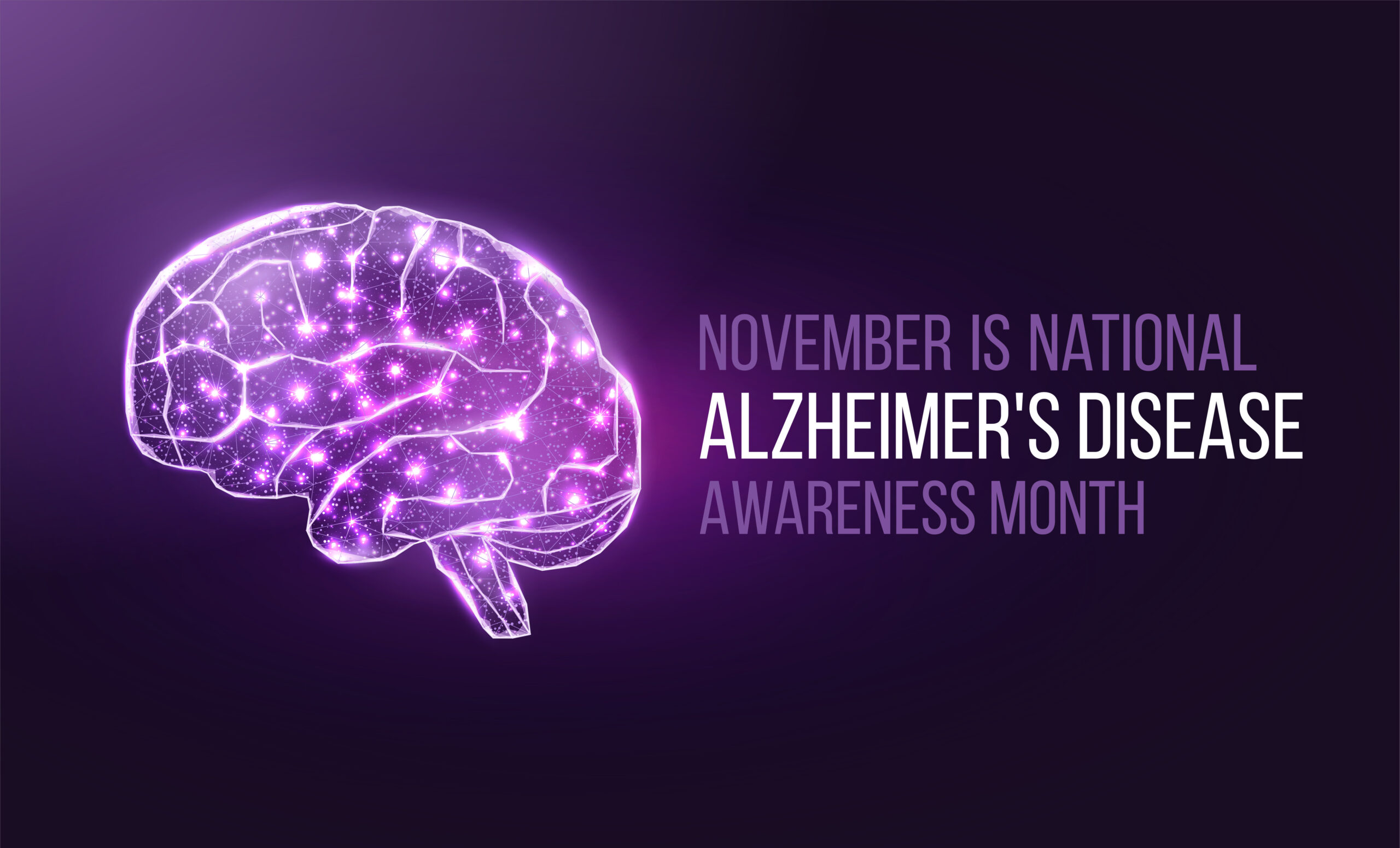
November is National Alzheimer’s Disease Awareness Month. Alzheimer’s is a progressive brain disorder that cannot be reversed. This disease declines the person’s ability to think, remember, and carry out familiar tasks.
The progressive decline in patients with Alzheimer’s is due to the loss of communication between neurons. The neurons are responsible for sending messages from the brain to all parts of your body.
The frontal lobe is responsible for your social and emotional skills, motor functions, language, and cognitive functions. When the frontal lobe is damaged, you may experience:
The parietal lobe is located at the back of the skull. It is responsible for your senses such as touch, taste, sight, smell, and temperature. Damage to the parietal lobe can affect any of these functions.
The temporal lobe’s primary function is to keep your memories. Damage to this lobe will make it hard to retain new information.
Commonly, individuals that develop Alzheimer’s are usually over the age of 65, but people under this age may develop it as well, which is considered early-onset.
The early signs of Alzheimer’s may begin with memory problems and difficulty learning new things or information due to damage in the brain’s hippocampus.
Other degenerative brain diseases include:
Vascular dementia is caused when you have had multiple strokes, which can cause brain damage which leads to the loss of memory in older adults.
Parkinson’s is a disorder that affects the central nervous system, which affects your movement and will often include tremors in certain parts of your body.
Frontotemporal dementia affects both the frontal and temporal lobes. As this type of dementia progresses, the nerve cells in these lobes are lost causing them to shrink, ultimately affecting behavior, movement, and ability to communicate.
A rare genetic disease that causes damage to nerve cells in the brain and eventually breaks them down progressively.
During the early stage, you may still function independently and continue your normal activities of daily living, such as driving, working, and participating in social events. However, you may experience lapses in your memory, such as forgetting words that are familiar to you.
The middle stage of Alzheimer’s is also known as the longest stage as it can last for years. During this stage, you may experience more pronounced Alzheimer’s symptoms, including confusing words in a conversation, refusing to do self-care such as bathing, and mood changes.
In the late stage of Alzheimer’s disease, the symptoms become more severe as you lose the ability to hold a conversation or control your movements. Worsening memory and significant changes to your personality also occur.
As Alzheimer’s symptoms progress and get worse, hospice care includes symptom management and providing emotional and spiritual support to you and your family.

Natasha Vakili found her passion for hospice very early in her career. After personally utilizing hospice services for her grandparents, she quickly saw the value hospice has for patients and families. She strives to ensure all patients and families benefit from hospice care in the same positive way as her family. Natasha’s focus is on maintaining financial stability so patients and families may receive the best care possible. Not only is she a Certified Hospice Administrator, she has her BBA in Business Administration and a BA in Psychology. Natasha joined Apreva Hospice in early 2011 and has since been dedicated to providing the highest service to Apreva patients.

Danish Farook is the Chief Business Officer for Apreva Hospice. His background as a Physician MBA allows him to focus on the transformation of healthcare in the Hospice arena, including development of patient focused teams, outcomes-based models, and business development. Danish strongly believes in a “Patient First” model of care. He is an alumnus of University of Xochicalco Medical School with post graduate training in the art of surgery. Danish is a member of the American College of Surgeons, Latino-American Federation of Surgery, American Society of Bariatric Physicians, American Association of Physician Leadership, and National Hospice & Palliative Care Organization.

Leigh Ann Grass, RN, BSN, PHN maintains focus toward creating a culture of treating patients and families as if they were our own family members. She places concentration toward the ultimate goal of patient-oriented healthcare and finds each day a blessing in doing so. Her career consists of 13 years of emergency, trauma and flight nursing; with the last 15 years in hospice and palliative care. Every day her professional objectives include using her skills, knowledge, and theory to improve the quality of life and comfort level of her fellow San Diego County community members. In addition to her important career at Apreva, she also sits on a local hospital Board of Directors.

According to the National Institute on Aging, 61% of Americans aged 65 or older have multiple chronic conditions. Aging is an inevitable part of life. There’s no avoiding it, but there are things we can do to age in a healthy manner. In honor of Healthy Aging Month, we are sharing some tips for focusing on healthy aging.
There are several components to consider when thinking about healthy aging. There is the obvious one: physical health. But it is also important to focus on others like mental health, social health, and even financial health.
Exercise is one of the most important ways to care for your physical health. Scientific evidence suggests that people who exercise regularly not only live longer, but they also live better. Keeping your body moving by doing things like walking the dog or gardening can help you stay independent as you age. Practicing exercises that focus on your balance can help you to avoid falls, while stretching can improve flexibility which can help your body maintain the freedom to do everyday activities.
Making smart nutrition choices is also important in helping maintain physical health. As we age, our bodies change, and thus so do our nutritional needs. AARP’s MyPlate for Older Adults breaks down exactly what a balanced nutrition plan looks like for older adults. It includes fruits and vegetables, healthy oils, herbs and spices, fluids, grains, dairy, and protein.
Regular health screenings are also important for maintaining physical health. There are many debates about how often an older adult should see their doctor, but it’s common to hear a recommendation of at least once per year.
Another incredibly important part of our overall wellbeing – at any age – is mental health. When your mental health suffers, it can have a negative impact on your physical health, as well. Clinical psychologist Carla Manley, PhD says people with mental illnesses can experience a variety of physical symptoms, including muscle tension, headaches, insomnia, and feelings of restlessness.
So how can we take care of our mental health as we age? One way would be to participate in activities that bring you joy. Research shows that having a hobby is linked to lower levels of depression and may even prevent depression. Some examples of hobbies that are good for our mental health are playing music, gardening, fishing, yoga, and writing. Puzzles like word searches, crossword puzzles, or sudoku are great hobbies that help to keep our mind sharp.
Research has linked social isolation and loneliness to a higher risk of physical and mental conditions such as high blood pressure, heart disease, a weakened immune system, depression, and Alzheimer’s disease. Engaging in meaningful activity with others gives us a sense of purpose which ultimately leads to a boosted mood and longer life. We can focus on several aspects of our health at once by taking our hobbies and making them a group activity. This could be in the form of a gardening or book club or simply taking a walk with a friend.
With most of the focus being on our physical health as we age, we can’t forget the importance of our financial health. This can be a little trickier to manage, and with all the information that is available online, it is tough to determine what is reliable. Senior Finance Advisor put together a list of reliable resources that help with investment advice and financial protection resources.
They also recommend finding a trusted fiduciary planner who can help you manage your money. The law requires them to always act in your best interest, and they tend to be more transparent in discussions of financial opportunities.
Remember, what we do today impacts tomorrow. It may feel overwhelming to think about changing bad habits or creating new healthy ones, but it’s the key to living a longer, healthier, happier life. Start small and remain consistent and dedicated to your goals. It will pay off!

By: Laura Mantine, MD
Ovarian cancer is cancer that grows in a woman’s ovaries. Damaged or deformed cells start to grow out of control. Although treatment has a high rate of success if the cancer is found at an early stage, in many cases it isn’t discovered until advanced stages when the cancer is harder to treat. A biopsy, or small surgery, is often performed when ovarian cancer is suspected. This is done to confirm the disease by taking tissue and fluid samples for analysis. Some ovarian tumors are benign, which means they don’t grow into cancer. Treatments for ovarian cancer vary based on the stage of the disease, but often include surgery and aggressive chemotherapy. These treatments may come with distressing side effects like pain, sleep problems, nausea, fatigue, loss of appetite, anxiety, or depression.
Facing ovarian cancer is difficult. It can have a big impact on your physical and emotional health, all of which may cause enormous stress for both you and your family. But you don’t have to face this alone. Treating the pain, symptoms, and stress of cancer is just as important as treating the cancer itself. Palliative care and hospice care are forms of supportive services available to people with cancer. Supportive care focuses on providing comfort, relieving pain or other symptoms, and improving quality of life. Supportive care doesn’t cure disease. The main difference between these two types of care is that you can receive palliative care at the same time you are receiving treatment, whereas hospice care begins after stopping standard cancer treatments for end-of-life management.
Once you decide to no longer receive chemotherapy or other standard cancer treatments, transitioning to hospice may be beneficial for both you and your family. When you choose hospice care, it means that the goals of treatment have changed with a shift from curative to comfort-based care. Hospice care is usually offered at the end of life, when you’re expected to live less than six months. The aim of hospice is to care for you rather than attempt to cure the disease.
Hospice care is very personalized. Your hospice care team will focus on making you as comfortable as possible. They will work with you and your family to create a care plan that best suits your goals and needs for end-of-life care. A hospice team member is generally on call 24 hours a day to provide support. You may receive hospice care in your home, a special hospice facility, a nursing home, or a hospital. A hospice team usually includes doctors, nurses, home health aides, social workers, clergy members or counselors, and trained volunteers. Services may include medical services, supplies and equipment, medications to manage pain and other cancer-related symptoms, spiritual support and counseling, and short-term relief for caregivers.
Medicare, Medicaid, and most private insurance plans will cover hospice care. Most U.S. insurance plans require a statement from your doctor that you have a life expectancy of six months or less. You may also be asked to sign a statement that you accept hospice care. Hospice care can continue for longer than six months, but your doctor may be asked to give an update on your condition.
Getting supportive care, whether palliative care or hospice care, can be beneficial to your mental and physical well-being. Talk to your doctor, family, and friends about your supportive care options.