After dedicating their lives to our nation, our nation’s veterans often face difficulty as they near the end of their lives. While every veteran has different needs, those with post-traumatic stress disorder (PTSD) face unique challenges. PTSD, sometimes known as combat stress or shell shock, often occurs after a person experiences severe trauma or a life-threatening event.
Operations Iraqi Freedom and Enduring Freedom. About 11-20%
Gulf War (Desert Storm). About 12%
Vietnam About 15% were diagnosed at a time of a study in the 1980s. It’s estimated that about 30% have had PTSD in their lifetime
It’s becoming increasingly more evident that veterans have a greater need for quality end-of-life care. Hospice care is a benefit that the VA offers to qualified veterans in the final phase of their lives.
Understanding Symptoms of PTSD in Veterans
Dangerous or life-threatening experiences such as combat can cause veterans to relive frightening events. These experiences cause feelings of uneasiness, anger, irritability, or anxiety. While it’s normal to be alarmed by unsettling memories, veterans with PTSD may experience these symptoms for more than a few months. Additionally, they may have difficulty sleeping, experience nightmares, and feel on edge. The veteran may also lose interest or find it extremely hard to participate in everyday activities. Other symptoms include:
Recurrent, intrusive reminders of the traumatic event
Extreme avoidance of people or places
Negative changes in attitude, mood, and personality
Emotionally reactive to people, places, or situations that remind them of the traumatic event
Ways to Alleviate PTSD in Veterans
When providing hospice care for veterans with PTSD, there are several considerations for the hospice team. Some symptoms of terminal illnesses, like severe pain, shortness of breath, and anxiety, may trigger flashbacks or nightmares. Additionally, opioid pain medication can make PTSD symptoms worse. The hospice team will collaborate with the patient’s healthcare team to prescribe the appropriate and most effective medication regimen. The hospice team will work with the veteran’s physician, social worker, and other interdisciplinary team members to create a plan of care. This plan of care may include:
Connecting with others
Staying social
Personalized medication and treatments
Personalized and effective non-pharmacological treatments
Professional social, emotional, and mental support
How Can Hospice Help Veterans?
Veterans are eligible for hospice care if enrolled in benefits and meet medical needs for hospice (terminal illness with a prognosis of six months or less). As of 2019, because of the VA Mission Act, Veterans now have increased access to more community healthcare options. Those who must drive 30 minutes or more to a VA provider or 60 minutes for specialty care may choose a provider closer to home.
Hospice uses a multi-disciplinary team approach to support and provide Veterans with end-of-life treatment. The team works closely with the VA and can provide support and treatment in the home. Hospice offers the veteran and caregivers:
24/7 on-call care
Medical equipment and supplies
Pain and symptom management
No co-pay for hospice care
Collaboration with the entire medical and healthcare team
Social workers
Spiritual and emotional support
Grief counseling
Medication management
Nurses
Hospice aides
Case managers
Dear Caregiver,
More Than a Cliché
You’ve heard the expression before – “laughter is the best medicine.” But it’s more than just a cliché phrase. There is some truth behind it. Think about it. We’ve all had a tough day where things just weren’t going right. Then, something made you laugh. You instantly felt better, right? This is because laughter is healing. There is actually science that backs this up.
Laughter is Good for Your Health
Besides just making you feel warm and fuzzy inside, laughter also has a ton of mental and physical health benefits that are proven to help you live a happier, healthier life.
It Reduces Stress
Let’s face it, we are all stressed for one reason or another. But as a caregiver, you have an added layer of stress. So you need a way to reduce that stress. Think about the last thing that made you laugh. Now think about how it made you feel. Happy and relaxed? This is because laughter reduces your level of stress hormones, such as adrenaline; and increases your level of health-enhancing hormones, such as endorphins. These ‘feel-good’ hormones are then released into the area of your brain that is responsible for emotion. So the more you laugh, the better you will feel!
It Boosts Your Immune System
Stress is tough on your body. Being over-stressed and burnt out can weaken your immune system and cause you to get sick more frequently. On the other hand, the stress relief and increase in positive emotions caused by laughter can be good for a healthy immune system.
It’s Good for Your Heart
We don’t have to tell you how important it is to take care of your heart. It’s what keeps us going by providing oxygen and important nutrients to our brain and other vital organs. Laughing increases your heart rate and the amount of oxygen in your blood. This improves the vascular function and can actually decrease your risk of heart attack.
It Improves Your Mood and Strengthens Relationships
Laughing is an excellent way to improve your mood. Nothing cures a bad mood quite like laughter. It can eliminate anger and depression and produce a general feeling of well-being. And people want to be around happy people. So when you are in a good mood and laughing, you are likely to attract other happy people. Sharing a laugh with friends and family can help you feel more connected to them, forming a strong and lasting bond.
Laugh More
So how can you add more laughter to your life for good health? It’s not like it’s something you can just add to your schedule. Here are some ways to naturally increase laughter:
Find humorous entertainment. With podcasts becoming more popular over recent years, there are plenty of funny podcasts you can listen to. There are also plenty of silly shows on TV that will make you laugh out loud. If reading is your thing, read a light-hearted book that makes you laugh.
Spend time with pets. You had a tough day at work, got stuck in traffic on your way home, and realized you forgot plan dinner. You’re in a bad mood. But then you get home, and your pet greets you at the door. You instantly forget why you’re upset. Spending time with pets is proven to make you feel better.
Try laughter yoga. Yes, it’s a thing. Here is a link that tells you all about it.
Host a game night. If a game night with friends and/or family doesn’t get you laughing, what will? There are plenty of fun games to get you giggling like Apples to Apples or Charades.
When the stress feels like it’s piling up, take a deep breath and do something that makes you laugh. After all it is the best medicine!
As Alzheimer’s and Brain Awareness Month continues, we want to discuss a very important topic- communication and Alzheimer’s. As the disease progresses, a person’s ability to communicate gradually diminishes. Changes in communication vary from person to person, but there are several common issues you can expect to see, including difficulty finding the right words and organizing words logically.
Effective Communication
If someone you love is living with the disease, you know it can be challenging at times to communicate with them. The video above discusses the following ten tips for effectively communicating with your loved one.
Never argue. Instead, listen.
Never reason. Instead, divert.
Never shame. Instead, distract.
Never lecture. Instead, reassure.
Never say ‘remember.’ Instead, reminisce.
Never say ‘you can’t.’ Instead, remind them what they can do.
Being aware of things like your tone, how loud your voice is, how you look at them, and your body language
Encouraging two-way conversation for as long as possible
Using other methods, such as gently touching
Distracting the person if communication creates problems
You also want to encourage the person to communicate with you. You can do this by doing things like holding their hand while you talk and showing a warm, loving manner. It is also important to be patient with angry outbursts and remember that it is just the illness talking.
If The Person is Aware of Memory Loss
Since the disease is being diagnosed at earlier stages, many people are aware of how it is impacting their memory. This can make communication even more sensitive because they may become frustrated when they are aware of the memory loss. Here are some tips for how to help someone who knows they have memory problems.
Take time to listen. They may want to talk about the changes they are noticing
Be as sensitive as you can and try to understand it is a struggle for them to communicate. Don’t correct them every time they forget something or say something odd
Be patient when they have a difficult time finding the right words
Find a balance between helping them find the right words and putting words in their mouth
Be aware of nonverbal communication. As they lose the ability to speak clearly, they may rely on other ways to communicate their thoughts and feelings
Additional Resources
For more information on Alzheimer’s disease and how it impacts communication, visit the links or reach out to the contacts below:
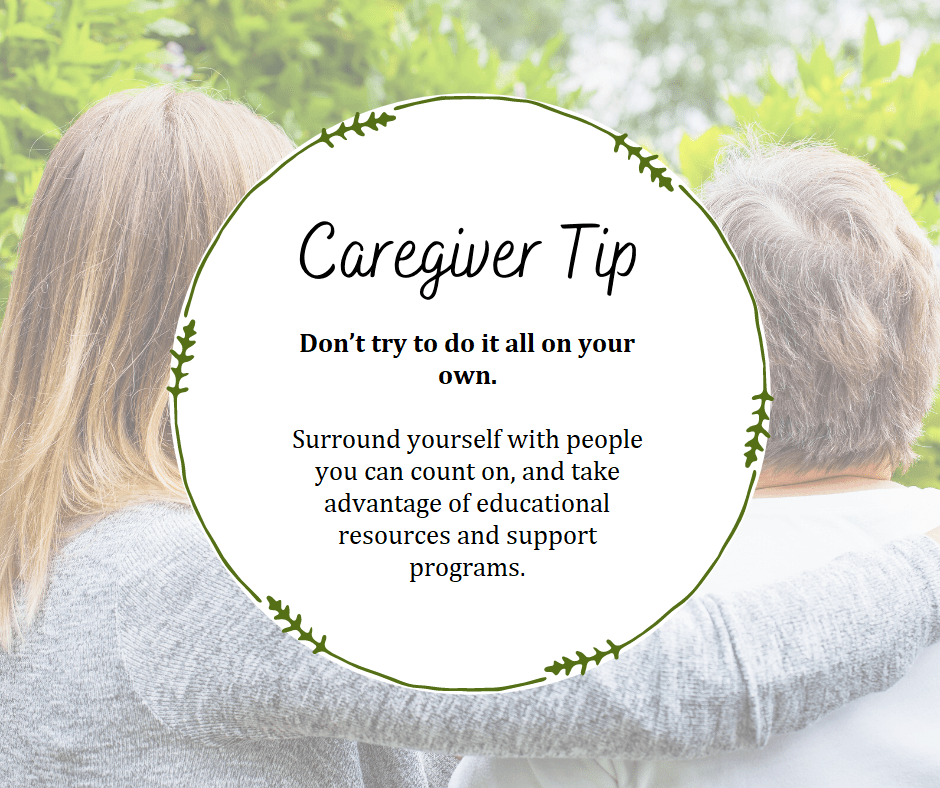
If you are caring for a loved one who is living with Alzheimer’s disease, you do not need us to tell you that it’s not easy. This progressive disease is difficult to cope with – for both the person living with it and their loved ones. People living with Alzheimer’s may become frustrated when they find themselves struggling to do things they used to do without any problem. And it is hard for you, as the caregiver, to watch the person they once were gradually fade away. They may have brief moments of clarity where it feels like they are themselves again; only to break your heart when the moment is gone.
While there is nothing anyone can do or say to “fix” what you and your loved one are going through, we want you to know you do not have to face it alone. The Alzheimer’s Association has an abundance of resources for both those living with Alzheimer’s and their caregivers. There are support and educational programs available for both, as well. Take advantage of these resources. They are there to help make things a little easier.
Understanding Alzheimer’s Disease
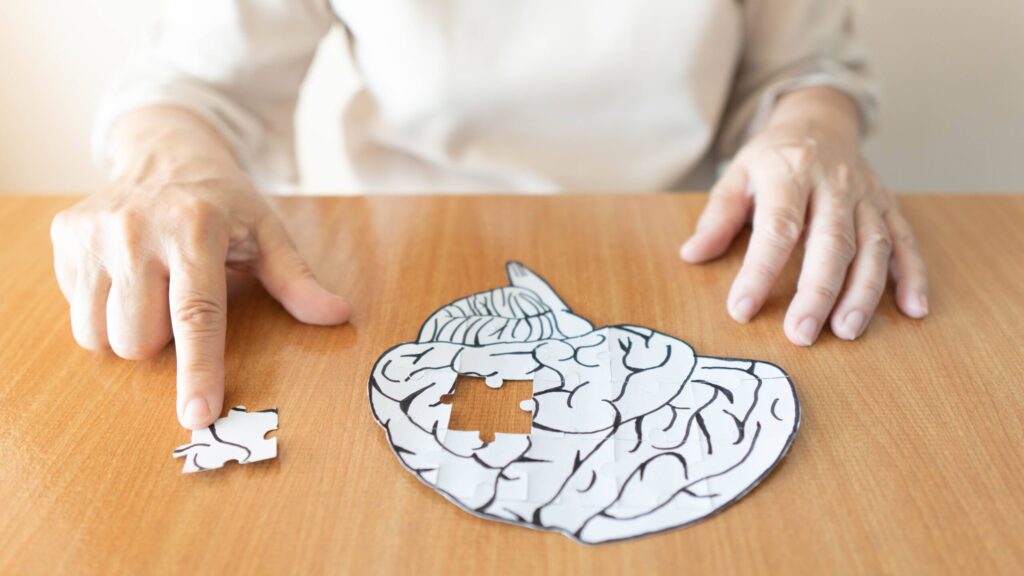
It all starts with gaining a better understanding of the disease and how it progresses. Alzheimer’s leads to nerve cell death and tissue loss throughout the brain. This results in the brain shrinking dramatically over time which impacts nearly all its functions.
Although scientists are not completely certain what causes cell death and tissue loss in a brain affected by Alzheimer’s, plaques and tangles appear to be the culprits. Plaques form when protein pieces called beta-amyloid clump together, and tangles destroy a vital cell transport system made up of proteins. Plaques and tangles tend to spread through the cortex in a predictable pattern as Alzheimer’s disease progresses, but the rate of progression varies greatly.
Early Stage
In the earliest stages, plaques and tangles begin to form in brain areas involved in learning and memory, as well as thinking and planning. In this stage, a person can still function independently but may start to notice they are sometimes forgetting familiar words or where to find everyday objects.
Someone in this stage may struggle to:
Think of the right word or name for something
Remember the name of someone they just met
Remember something they just read
Plan or organize things
Middle Stage
In the middle stage, more plaques and tangles develop in the regions of the brain important for memory, thinking, and planning. This leads to the development of problems with memory or thinking that are severe enough to interfere with work or social life. In this stage, someone with Alzheimer’s may have trouble handling money, expressing themselves, and organizing their thoughts. Plaques and tangles also spread to areas involved in speaking and understanding speech and the sense of where your body is in relation to objects around you. It is in this stage that many people are first diagnosed.
Symptoms vary from person to person, but may include:
Forgetting events or personal history
Feeling moody or withdrawn
Being unable to recall personal information such as their address
Confusion about what day it is or where they are
Late Stage
Most of the cortex is seriously damaged by the time someone reaches the late stage of Alzheimer’s disease. By this point, the brain shrinks dramatically due to widespread cell death. Individuals often lose their ability to communicate, recognize family and loved ones, and to care for themselves in this stage.
In this stage, symptoms are severe and may include:
Need for around-the-clock personal care
Loss of awareness of recent experiences and their surroundings
Changes in physical abilities such as walking and eventually swallowing
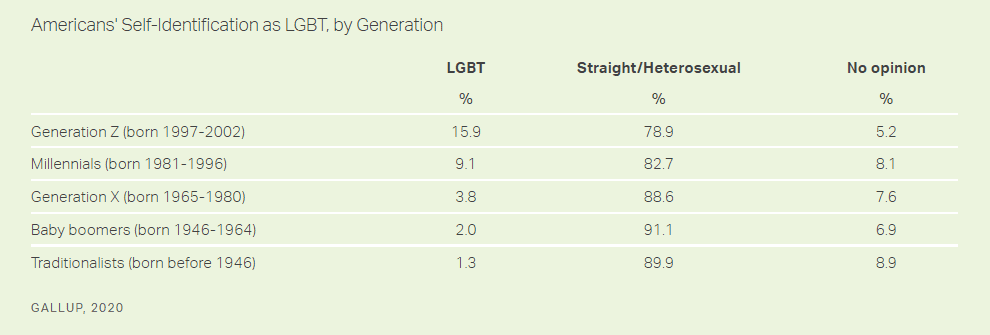
A 2020 Gallup study observed Americans’ identification as lesbian, gay, bisexual, or transgender (LGBT), by generation. The findings report that only 1.3% of the Traditionalist generation (born before 1946) and 2.0% of Baby Boomers (born 1946-1964) identify as LGBT. This number increases dramatically over the generations, reaching 15.9% for Generation Z (born 1997-2002). The question is – does the higher percentage of younger Americans reflect a true shift in sexual orientation? Or is it simply reflecting a greater willingness to identify as LGBT?
Although those who make up the younger generations were born into a world where huge progress has been made in the gay rights movement, the older generations of the LGBTQ community experienced much less accepting times. It wasn’t until 1961 that Illinois became the first state in the United States to get rid of its sodomy law. It then took another ten years before 20 more states followed their lead. So even though Traditionalists and Baby Boomers were around to witness the progress that has been made, many may still have the mindset that society will not accept them for who they are.
It is this fear of discrimination that may play a part in their hesitation to seek the help and support they need as they near the end of their life. As a result, the LGBTQ community has been historically underserved by hospice. A 2011 study reported that 20% of LGBTQ seniors that were surveyed did not even reveal their sexual orientation to their primary physician for fear of discrimination. Beyond hospice services for the patient, their grieving partner often misses out on bereavement support as they care for their partner in their final months and days.
Resources for the Aging LGBTQ Community
Hospices are now working harder than ever to understand the specific needs of the aging LGBTQ community and to do all they can to accommodate those needs. The National Resource Center on LGBT Aging is a resource center focused on improving the quality of services and support offered to lesbian, gay, bisexual, and/or transgender older adults. Their website includes resources that cover a variety of topics, including end of life decisions. You can also use the interactive map to find resources in your area.
No one should miss out on the benefits of hospice care for any reason, especially for fear of discrimination.
Happy Pride Month!
June is…
June is Alzheimer’s and Brain Awareness Month. This month-long celebration provides the opportunity to focus on raising awareness for the 50 million people worldwide living with Alzheimer’s and other dementias.
Alzheimer’s Disease
Alzheimer’s disease is a degenerative brain disease and the most common form of dementia. It causes a slow decline in memory, thinking, and reasoning skills. Schedule an appointment with your doctor if you notice any of these ten signs and symptoms:
Memory loss that disrupts daily life
Challenges in planning or solving problems
Difficulty completing familiar tasks
Confusion with time or place
Trouble understanding visual images and spatial relationships
New problems with words in speaking or writing
Misplacing things and losing the ability to retrace steps
Decreased or poor judgment
Withdrawal from work or social activities
Changes in mood and personality
Visit the website for the Alzheimer’s Association for more information on these signs and symptoms to be on the lookout for.
Take Action
There are several ways to get involved in Alzheimer’s and Brain Awareness Month! On June 20th, join the cause by celebrating ‘The Longest Day’ through a fundraising activity of your choice! There are a variety of ways to get involved, including virtually and in-person.
So put on your purple gear, share your story of why you go purple, and join the fight to #EndAlz!
Remember and Honor
To remember and honor those who paid the ultimate sacrifice for our country…this is the meaning of Memorial Day. Without their bravery and true heroism, we would not have the freedoms we do. And it is our responsibility as Americans to remember and honor them each and every day, especially today.
History of Memorial Day
Memorial Day was initially known as Decoration Day and honored only those lost while fighting in the Civil War. On the first Decoration Day, General James Garfield made a historic speech while 5,000 participants decorated the graves of 20,000 Union and Confederate soldiers buried at Arlington Cemetery. It was after World War I when the holiday evolved to commemorate American military personnel who died in all wars. In December of 2000, a resolution was passed that asks all Americans to pause at 3PM local time for a moment of silence.
The Story of the Poppy
The poppy became a powerful symbol of remembrance thanks to a famous poem written by Lieutenant Colonel John McCrae. McCrae was a Canadian who served as a brigade surgeon for an Allied artillery unit. He was inspired when he saw the bright red flowers blooming on broken ground; and so he wrote a poem from the point of view of the fallen soldiers buried underneath them.
In Flanders Fields
by John McCrae
In Flanders fields the poppies blowBetween the crosses, row on row,That mark our place; and in the skyThe larks, still bravely singing, flyScarce heard amid the guns below.We are the Dead. Short days agoWe lived, felt dawn, saw sunset glow,Loved and were loved, and now we lie,In Flanders fields.Take up our quarrel with the foe:To you from failing hands we throwThe torch; be yours to hold it high.If ye break faith with us who dieWe shall not sleep, though poppies growIn Flanders fields.
Soak Up the Sun…Safely
Summer is just around the corner, which mean barbeques, swimming, and SUN! And while most of us enjoy getting outside and soaking up a little Vitamin D, it is important to remember to be safe when heading outside into the sun. Per the American Academy of Dermatology Association, skin cancer is the most common cancer in the United States, and unprotected UV exposure is the most preventable risk factor for skin cancer.
With that being said, it is important to follow these three steps to protect your skin:
Seek shade: Remember, the sun’s rays are the strongest between 10AM and 2PM
Wear sun-protective clothing: Sunglasses and hats are key!
Apply sunscreen: Use a broad-spectrum, water-resistant sunscreen with at least SPF 30
Signs of Skin Cancer
Finding skin cancer early, before it has spread, makes it much easier to treat. If you know what to look for, you can often spot warning signs early on. Doctors recommend checking your own skin about once a month using a full-length mirror in a well-lit room. You can also use a hand mirror to check areas that are harder to see.
Melanoma is one of the deadliest forms of skin cancer, while basal and squamous cell skin cancers are more common but are usually very treatable. The American Cancer Society’s website discusses these types of skin cancers and what to look out for.
Melanoma
Use the “ABCDE” rule to look for some of the common signs of melanoma:
Asymmetry – one part of a mole or birthmark doesn’t match the other
Border – the edges are irregular, ragged, notched, or blurred
Color – the color is not the same all over and may include shades of brown or black, sometimes with patches of pink, red, white, or blue
Diameter – the spot is larger than ¼ inch across (although melanomas can sometimes be smaller than this)
Evolving – the mole is changing in size, shape, or color
Basal Cell Carcinomas
These types of skin cancers typically grow on parts of the body that get the most sun, such as the face, head, and neck. However, they can still show up anywhere. Here is what you should look for:
Flat, firm, pale, or yellow areas (similar to a scar)
Raised reddish patches, might be itchy
Small shiny, pearly bumps that are pink or red
Pink growths with raised edges and a lower area in the center, which might have abnormal blood vessels spreading out like the spokes of a wheel
Open sores that may have oozing or crusted areas and do not heal, or heal and then come back
Squamous Cell Carcinomas
Similarly to basal cell carcinomas, these typically grow on the parts of the body that get the most sun but can appear anywhere. You should look for:
Rough or scaly red patches, which may crust or bleed
Raised growths or lumps, sometimes with a lower area in the center
Open sores that may have oozing or crusted areas and do not heal, or heal and then come back
Wart-like growths
Talk to Your Doctor
Although these are good examples of what to look for, some skin cancers may look different than these descriptions. It is important to talk to your doctor about anything you are concerned about, such as new spots and other skin changes.
Manage Consent
We use technologies like cookies to store and/or access device information. We do this to improve browsing experience and to show (non-) personalized ads. Consenting to these technologies will allow us to process data such as browsing behavior or unique IDs on this site. Not consenting or withdrawing consent, may adversely affect certain features and functions.
Functional
Always active
The technical storage or access is strictly necessary for the legitimate purpose of enabling the use of a specific service explicitly requested by the subscriber or user, or for the sole purpose of carrying out the transmission of a communication over an electronic communications network.
Preferences
The technical storage or access is necessary for the legitimate purpose of storing preferences that are not requested by the subscriber or user.
Statistics
The technical storage or access that is used exclusively for statistical purposes.The technical storage or access that is used exclusively for anonymous statistical purposes. Without a subpoena, voluntary compliance on the part of your Internet Service Provider, or additional records from a third party, information stored or retrieved for this purpose alone cannot usually be used to identify you.
Marketing
The technical storage or access is required to create user profiles to send advertising, or to track the user on a website or across several websites for similar marketing purposes.



 Although those who make up the younger generations were born into a world where huge progress has been made in the gay rights movement, the older generations of the LGBTQ community experienced much less accepting times. It wasn’t until 1961 that Illinois became the first state in the United States to get rid of its sodomy law. It then took another ten years before 20 more states followed their lead. So even though Traditionalists and Baby Boomers were around to witness the progress that has been made, many may still have the mindset that society will not accept them for who they are.
It is this fear of discrimination that may play a part in their hesitation to seek the help and support they need as they near the end of their life. As a result, the LGBTQ community has been historically underserved by hospice. A 2011 study reported that 20% of LGBTQ seniors that were surveyed did not even reveal their sexual orientation to their primary physician for fear of discrimination. Beyond hospice services for the patient, their grieving partner often misses out on bereavement support as they care for their partner in their final months and days.
Although those who make up the younger generations were born into a world where huge progress has been made in the gay rights movement, the older generations of the LGBTQ community experienced much less accepting times. It wasn’t until 1961 that Illinois became the first state in the United States to get rid of its sodomy law. It then took another ten years before 20 more states followed their lead. So even though Traditionalists and Baby Boomers were around to witness the progress that has been made, many may still have the mindset that society will not accept them for who they are.
It is this fear of discrimination that may play a part in their hesitation to seek the help and support they need as they near the end of their life. As a result, the LGBTQ community has been historically underserved by hospice. A 2011 study reported that 20% of LGBTQ seniors that were surveyed did not even reveal their sexual orientation to their primary physician for fear of discrimination. Beyond hospice services for the patient, their grieving partner often misses out on bereavement support as they care for their partner in their final months and days.