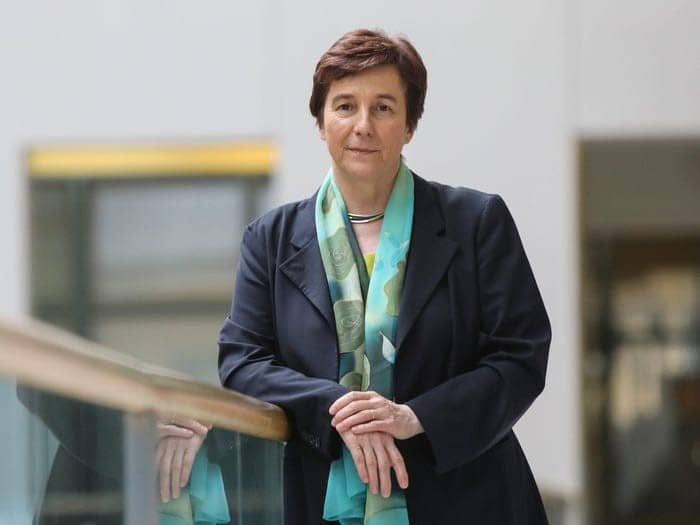
“A challenged world is an alert world. Individually, we are all responsible for our own thoughts and actions – all day, every day. We can all choose to challenge and call out gender bias and inequality. We can all choose to seek out and celebrate women’s achievements. Collectively, we can all help create an inclusive world.” -Unknown
International Womens Day
International Women’s Day (IWD) is reserved to recognize the social, economic, cultural, and political achievements of women, as well as to raise awareness about women’s equality, lobby for accelerated gender parity, and fundraise for female-focused charities. Although we are only beginning the third month of 2021, it has already been a big year for women. The Business Insider has compiled a list of the most powerful women in 2021. Just to name a few…
Kamala Harris was sworn in as the first woman, black, and South Asian Vice President of the United States on January 20th, 2021. “While I may be the first woman in this office, I will not be the last, because every little girl watching tonight sees that this is a country full of possibilities.” – during her VP-acceptance speech in Nov. 2020
Kathrin Jansen is the head of vaccine research and development at Pfizer. Beginning in March 2020, she led a team of 650 experts to develop a successful vaccine against COVID-19.
Sheryl Sandberg is the current Chief Operating Officer of Facebook. Under her administration, Facebook managed to recover $22.1 billion in profits in 2018 after having suffered a $56 million loss previously. She became the first female member of the company’s board of directors in 2012, and in 2014, made the Forbes’ Billionaires list due to her vesting stake in Facebook.
Shonda Rhimes is an award-winning television writer and producer. She created the ABC drama ‘Grey’s Anatomy’, which currently is the longest-running medical drama on television, in addition to several other very popular shows. She is an activist and co-founder of the ‘Times Up’ movement, seeking to promote gender equality in the television and film industry, as well as to lobby for legislation that would penalize companies that tolerate sexual or gender-based harassment.
And Everyday Heroes
These are only a handful of the many incredible women changing the world each and every day. Please find time today to reflect and recognize the everyday heroes that make achievements and contributions to make a world a better place for everyone!
Learn more about International Women’s Day and the 2021 theme ‘Choose to Challenge!’ & view Business Insider’s full list of the most powerful women in 2021.
By Joelle Y. Jean, FNP
Due to its busy nature, providers in the Emergency Room (ER) may not immediately identify patients for hospice care. Approaching patients or family members about hospice can also be challenging-especially if they have specific questions. This hospice checklist can help guide providers on when they should consider a patient for hospice.
What is hospice?
Hospice is for patients who are at the end of life. Patients can have a terminal illness or declining health from a chronic illness. The hospice team can coordinate care with health care providers to manage and treat patients.
Initiating hospice early in the disease process has many benefits for the patient and family members. Hospice is there to improve the quality of life and provide comfort for patients during their end of life. Benefits of hospice include:
Improved physical and psychological symptoms
Caregiver relief
Reduced hospitalizations
Lowered hospitalization costs
Reduced hospital deaths
Barriers to initiating hospice
Studies have shown that providers initiate hospice too late- patients die within weeks of entering hospice. There are barriers that cause ER providers to wait or not consider hospice. Some barriers include:
Not having the right resources
Breakdowns in patient-clinician communication
Failing to identify terminal stage of life
Geographical and socioeconomic barriers
Head-to-toe hospice checklist
Alzheimer’s disease and dementia
Patients in the late stages of Alzheimer’s disease or dementia are candidates for hospice. At this stage, they start to lose activities of daily living (ADLs) and cannot complete basic functions on their own. These functions include:
Bathing
Dressing
Eating
Swallowing
Other signs providers should consider patients with Alzheimer’s disease or dementia for hospice are:
Loss of the ability to walk (life expectancy is about a year)
Patients in their late stages of heart failure (HF) are candidates for hospice. Providers should consider hospice if the patient has:
Visited the ER two or more times in the past six months
A decline in ADLs
Severe HF symptoms such as dyspnea, angina, fatigue
Not responded to pharmacological and non-pharmacological interventions
Ineligible for surgery
Weight and muscle loss
NYHA class three/four heart failure
Lung disease and lung cancer
Patients with end-stage lung disease and lung cancer are hospice candidates. Providers should consider hospice if the patient:
Has frequent ER visits
Increased weight loss
Increased dyspnea at rest even with oxygen
Stage four non-small lung cancer
Liver disease
Patients with end-stage liver disease are candidates for hospice. Liver disease is the 12th leading cause of death in the United States. Patients with liver disease are often overlooked for hospice care. Providers should consider hospice for patients with end-stage liver disease if they are:
Ineligible for a liver transplant
Increased pain
Increased pruritus
Increased nausea
Depression and anxiety
A decline in cognition and weight
Cancers
ER providers can opt for hospice for patients with cancer if treatment is no longer working or there are no other treatment plans. Patients also at the end stage of their cancer can benefit from entering hospice early. Other signs a patient is ready for hospice are if the patient:
Has increased weakness
Significant weight loss
Pain control
In bed for most of the day
Sepsis
It’s not always easy to identify patients with sepsis who qualify for hospice. However, some patients meet the criteria. Providers should consider patients with sepsis for hospice if the patient:
Has impaired kidney failure
Not responding to pharmacological treatment
Require mechanical ventilation
Injury to the liver
Hyperlactemia
Hospice is available to patients who are at the end of their life. They can entire at any stage in their disease process. Initiating hospice early benefits the patient. Studies have shown that hospice improves mood, decreases medical interventions, and enhances the patient’s overall quality of life.Grief. It’s a small word with a big effect. At worst it is crippling. At best it is nagging. And holidays seem to magnify the heartache that follows grief, regardless of when the loss took place.
For some, pushing through the holidays and honoring time old traditions can be the perfect way to memorialize a loved one. But for others, creating and celebrating new traditions or skipping the holiday festivities altogether might be easier to bare.
There’s no right or wrong way to grieve during the holidays. Even two people who experienced the same loss will grieve differently. Many factors, such as the relationship to the deceased; the surviving individual’s belief and spirituality; past experiences with loss; and the survivor’s willingness and ability to express their grief can impact each survivor differently.
Regardless of how you choose to celebrate or not celebrate the holidays, the following steps can help you feel more prepared to handle your grief:
Acknowledge that the holidays will be different.
Acknowledge that the holidays will be tough.
Communicate your holiday plans with family and friends so that they will know what to expect.
Recognize that even family and friends within your own grief circle may have different plans for how they wish to spend the holidays. Seek to find common ground, establish your plan should the holidays become too much for either party, or choose to celebrate separately if their plans conflict with your level of comfort.
Seek help from a friend that you trust who can be there for you without offering advice or trying to “fix” your grief.
Say “yes” to help if you need the support.
Our wish for you this holiday season, and always, is that you can find joy amid sorrow as you remember your loved one.
Manage Consent
We use technologies like cookies to store and/or access device information. We do this to improve browsing experience and to show (non-) personalized ads. Consenting to these technologies will allow us to process data such as browsing behavior or unique IDs on this site. Not consenting or withdrawing consent, may adversely affect certain features and functions.
Functional
Always active
The technical storage or access is strictly necessary for the legitimate purpose of enabling the use of a specific service explicitly requested by the subscriber or user, or for the sole purpose of carrying out the transmission of a communication over an electronic communications network.
Preferences
The technical storage or access is necessary for the legitimate purpose of storing preferences that are not requested by the subscriber or user.
Statistics
The technical storage or access that is used exclusively for statistical purposes.The technical storage or access that is used exclusively for anonymous statistical purposes. Without a subpoena, voluntary compliance on the part of your Internet Service Provider, or additional records from a third party, information stored or retrieved for this purpose alone cannot usually be used to identify you.
Marketing
The technical storage or access is required to create user profiles to send advertising, or to track the user on a website or across several websites for similar marketing purposes.