October is Depression Education and Awareness Month, which aims to educate people on how depression impacts individuals and families and to decrease negative connotations associated with this mental illness.
Depression can affect anyone, anywhere. Depression in hospice and home healthcare settings is expectantly common. A life-altering diagnosis or the impending loss of life can amplify feelings of hopelessness and isolation. The transition from an independent life to one that requires constant care or special accommodations can trigger feelings of loss of control and dignity. Patients are also often concerned with burdening their families, further contributing to depression.
Home healthcare and hospice workers play a crucial role in educating patients and their families about the emotional aspects of dealing with a life-changing diagnosis or impairment. This guidance is essential as patients navigate the complex emotional terrain accompanying such changes.

It’s essential to recognize the difference between clinical depression and a sad or depressed mood. Yet, identifying depression can be challenging.
Some of the challenges faced by home healthcare and hospice workers in identifying depression in patients include:
Our compassionate care teams address the emotional and spiritual needs of the patient and their families, along with physical care. Our interdisciplinary teams create personalized plans, including mental health counseling and bereavement support.
Our social workers can help patients dealing with depression due to a life-changing diagnosis by collaborating with local support groups, therapists, and other mental health professionals to provide comprehensive care.
Our bereavement coordinators can help patients recognize and cope with signs of depression and provide emotional support to family members grieving the impending loss of a loved one.

Popular therapeutic techniques used by bereavement coordinators and other mental healthcare providers to treat depression include:
It’s important for mental health professionals to create a supportive environment that encourages open communication and meaningful conversations about feelings of depression while respecting emotional boundaries. Our healthcare professionals continue to seek innovative ways to improve mental health and overall quality of life for their patients and families.
The month of October is dedicated to speaking up and raising awareness about breast cancer. What is it? Who gets it? What can I do to avoid it? How can I help people with breast cancer? Breast cancer can be a devastating diagnosis, but increasing your knowledge about it can bring some relief from fear. Learning about breast cancer could help you or your loved ones decrease risk or find treatment
The American Cancer Society estimates that breast cancer is responsible for 30% of all newly diagnosed female cancers annually. The following statistics reflect the impact of breast cancer in the U.S. in 2022:

Breast cancer is one of the most common cancers in women, second only to skin cancers in terms of prevalence. It is caused by a genetic mutation in the breast tissue cells that causes them to divide and grow without regulation. Depending on the type of breast tissue, and the specific genetic mutation involved, breast cancer may have different outcomes.
Once a tumor forms, cancer cells can metastasize by traveling through the bloodstream and settling in other parts of the body. If metastasis occurs, elimination of cancer can become more difficult. The two most common types of breast cancer are:
Studies of a tumor can reveal if a person’s cancer has particular receptors to respond to treatment. If a person has one of the three most common receptors found in breast tissue, cancer doctors can use therapy that targets the cancer cells with less extreme side effects.
There are many risk factors for breast cancer, but some of them can be controlled. To reduce the risk factors that contribute to breast cancer, you can:

If you have a high risk of breast cancer, performing regular self-examinations can help catch it early. Early diagnosis may allow for a more successful treatment. Your trusted medical professionals can help you figure out an exercise routine, diet, and screening schedule to keep you with your loved ones as long as possible.
Though significant progress has been made in the field of breast cancer treatment, there is still more that can be done. Speaking openly about breast cancer, supporting the American Cancer Society and other organizations that research cancer treatment, and encouraging your loved ones to be regularly screened can reduce the impact of breast cancer on society.
Ask questions and learn about breast cancer. Awareness starts with yourself! Working together, it is possible to minimize the influence of breast cancer in our communities. Our team is available to help navigate you to recourses that can help you or a loved one.
When it comes to hospice care, our team is focused solely on providing comfort and pain-free care to hospice care patients. For both hospice patients and their families, coping with terminal illness brings about a wide array of emotional worries and concerns. In addition to emotional stress, those with congestive heart failure (CHF) may also feel uncomfortable physically.

Congestive heart failure (CHF) occurs when a person’s heart can no longer pump blood well throughout the body. As a result, patients may experience symptoms such as chest pain, fluid retention, shortness of breath, and other uncomfortable symptoms related to breathing. For patients experiencing these symptoms, certain medications such as Lasix may help enhance comfort while on hospice care.
People with congestive heart failure (CHF) may experience swelling and edema throughout the body. This symptom can be uncomfortable, causing a person to have abdominal swelling and ankle/leg swelling. CHF can also cause swelling in the lungs in some patients.
To help combat this, Lasix is a diuretic medication (water pill) that helps reduce this uncomfortable swelling. Lasix works by preventing the body from absorbing too much salt, which means less fluid retention.

Hospice patients on diuretic medications may need support from their hospice care team. This medication can make patients need to urinate more frequently and require additional hydration. The Adobe Hospice team is here to support patients on Lasix and aid in managing symptoms and side effects.
Taking care of symptom management and enhancing comfort is a vital component of hospice care. If you or a loved one is experiencing unpleasant symptoms of heart failure, speak to your hospice team. Based on each person’s needs, our nurses can help administer medications that can provide comfort for hospice patients. To learn more, contact one of our Community Liaisons today!
We observe Sepsis Awareness Month in September as a time to raise awareness of this life-threatening condition. Sepsis is the body’s extreme response to an infection, and it can quickly lead to tissue damage, organ failure, and death.
Sepsis is a medical emergency that occurs when the body’s response to an infection damages its own tissues and organs. The infection can start anywhere in the body, but the most common sites are the lungs, urinary tract, and skin.
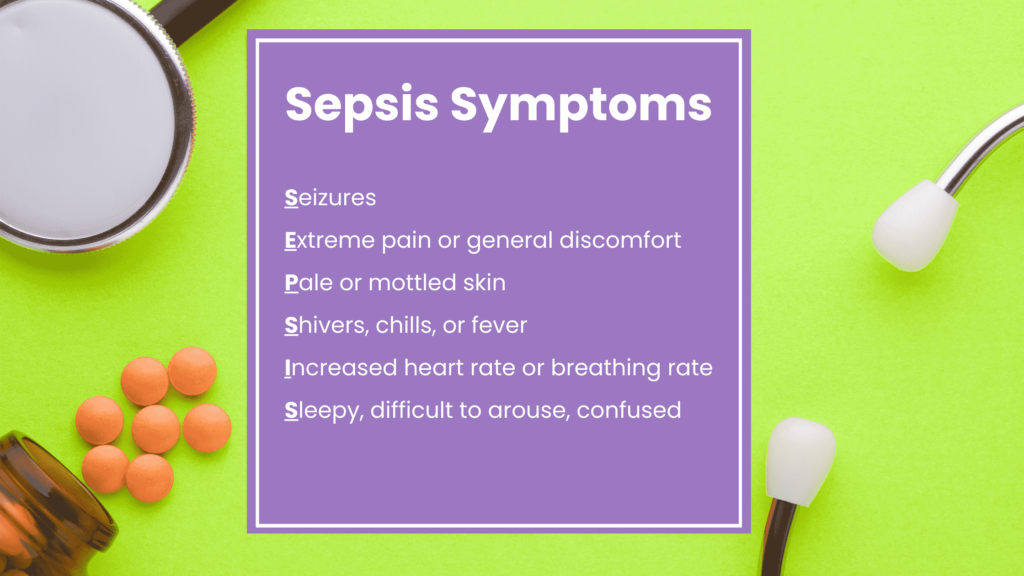
The signs and symptoms of sepsis can vary depending on the person and the severity of the infection. However, some common signs include:
• Fever
• Chills
• Rapid breathing
• Rapid heart rate
• Confusion
• Low blood pressure
• Pale or mottled skin
• Rash
• Seizures
• Extreme pain or general discomfort
If you think you or someone you know may have sepsis, it is important to seek medical attention immediately.
Sepsis is treated with antibiotics and fluids. In some cases, surgery may also be necessary to remove the source of the infection.
The best way to prevent sepsis is to prevent infections in the first place. This can be done by:
• Washing your hands often with soap and water
• Getting vaccinated against common infections, such as pneumonia and the flu
• Taking care of cuts and scrapes
• Practicing safe sex

In addition to raising awareness, Sepsis Awareness Month is a time to encourage people to learn the signs and symptoms. By knowing the signs and symptoms, you can help save lives.
Here are some ways you can help raise awareness of sepsis during September:
• Wear a purple ribbon, the color of sepsis awareness
• Talk to your friends and family about sepsis
• Share information about sepsis on social media
• Donate to a sepsis awareness organization
Together, we can help raise awareness of sepsis and save lives.
This year from September 10th through September 16th, join us in celebrating Assisted Living Week 2023. We celebrate this week to recognize all the amazing people involved in assisted living facilities (ALF), including staff, volunteers, and hospice and home healthcare professionals.
This year’s Assisted Living Week has been given a “Season of Reflection” theme, designed to symbolize the staff in assisted living facilities that go above and beyond to make these facilities feel like home for residents.
We strive to maintain strong partnerships with hospice and home healthcare professionals. Many patients interested in home care come from assisted living facilities, which means a change of environment and transition of care is required. Our team works closely with staff in assisted living facilities to help make the transition to home as easy as possible. Working closely with a patient’s care team ensures a smoother transition with fewer setbacks, supporting the patient to help regain independence in their own home.

In addition to home healthcare services, we offer supportive hospice care to those in assisted living facilities. Our hospice services can be provided no matter where a patient is located, which includes patients living in assisted living facilities. Working closely with staff at assisted living facilities, together, we can create as comfortable an environment as possible for those who are terminally ill. Our goal is to help individuals live their final days, weeks, or months with respect, peace, and dignity.
We want to recognize the profound role that employers of assisted living facilities have on patients. Furthermore, we want to remind staff that we are here to help, creating partnerships that help us all thrive. Join us in raising awareness and celebrating Assisted Living Week 2023 by using the hashtag #NALW on social media posts.
Healthy Aging Month is an annual observance, dedicated to promoting healthy aging for seniors. The month of September was chosen for this observance because it is the month that marks the beginning of the fall season, a time when many seniors begin to think about their health and well-being.
The purpose of Healthy Aging Month is to raise awareness of the importance of healthy aging and to provide resources and information to help seniors live their best lives. The observance is also a time to celebrate the achievements of older adults and to recognize their contributions to society.
As the population of the United States continues to age, the importance of healthy aging is becoming increasingly clear. By 2030, it is estimated that there will be over 70 million adults over the age of 65 in the United States. This means that there will be a greater need for services and programs that support healthy aging.
There are many benefits to healthy aging. Seniors who are physically and mentally healthy are more likely to be independent and self-sufficient. They are also more likely to participate in social activities and to contribute to their communities. Healthy aging can also help to prevent chronic diseases and disabilities, which can lead to costly medical care.

There are many things that can be done to promote healthy aging. Some of the most important include:
A healthy diet includes plenty of fruits, vegetables, whole grains, and lean protein. It is also important to limit unhealthy fats, sugar, and salt.
Exercise is essential for maintaining physical health and preventing chronic diseases. Adults over the age of 65 should aim for at least 150 minutes of moderate-intensity aerobic activity or 75 minutes of vigorous-intensity aerobic activity each week.
If you have a chronic condition, such as heart disease, diabetes, or arthritis, it is important to manage it effectively. This may involve taking medication, following a special diet, or getting regular exercise.
Social interaction is important for mental health and well-being. Stay connected with friends and family and participate in activities that you enjoy.
Adults over the age of 65 need 7-8 hours of sleep per night.

There are many resources available to help seniors live healthy lives. Some of these resources include:
The National Institute on Aging (NIA) provides information on a variety of topics related to healthy aging, including nutrition, exercise, and chronic diseases.
The Centers for Disease Control and Prevention (CDC) also provides information on healthy aging. The CDC’s website includes a section on “Aging and Health” that provides information on a variety of topics, such as falls prevention, elder abuse, and dementia.
The National Council on Aging (NCOA) is a non-profit organization that provides a variety of services and resources to older adults. NCOA’s website includes a section on “Healthy Aging” that provides information on a variety of topics, such as staying active, managing chronic conditions, and financial planning.
Healthy Aging Month is a time to focus on the importance of healthy aging and to provide resources and information to help seniors live longer, healthier lives. By following the tips outlined above, seniors can improve their overall health and well-being and enjoy a more fulfilling life.
August is National Immunization Awareness Month (NIAM). This annual event is an important reminder that vaccination is one of the safest and most effective strategies for preventing transmissible diseases. Each year, millions of people of all ages benefit from receiving vaccines.
Older adults are particularly susceptible to certain vaccine-preventable illnesses and are at higher risk of serious compilations from illnesses, such as the flu. Getting vaccinated as an adult can reduce the risk of health issues related to vaccine-preventable conditions.

There are more than 55 million people over the age of 65 in the United States. Older adults are often more medically vulnerable than younger people. Illnesses such as pneumonia or influenza can lead to serious complications, resulting in hospitalization, prolonged illness, or death.
To protect the health of older adults, the Centers for Disease Control and Prevention (CDC) recommends vaccines to protect older adults from illnesses that could seriously damage their health.

Adults at high risk of meningitis, hepatitis A and B, or Hib may need additional vaccines to prevent those illnesses. Adults who travel may need vaccines for diseases prevalent in their destinations.
Many doctor’s offices and pharmacies offer vaccinations. Medicare Part B and Part D cover certain vaccines, as do private insurance plans. Some workplaces or community organizations offer free or discounted vaccines to people who might otherwise be unable to afford them.
To learn more about recommended vaccinations for people of all ages, visit the CDC’s vaccine schedule or talk to a doctor about what vaccines you need.
References:
https://www.cdc.gov/vaccines/vpd/pneumo/public/index.html
https://www.cdc.gov/vaccines/schedules/downloads/adult/adult-combined-schedule.pdf
People sidestep discussing or even thinking about death for good reason. Though death is ominous, it is also inevitable. We recommend that those who have not made a will and advanced directive should seize the opportunity to do so.
Make life less stressful by meeting with an estate planning attorney to create a will. In particular, if you’re in your golden years, you will enjoy invaluable peace of mind with the creation of a will. Moreover, if you’re suffering from a serious medical condition, regardless of your age, you will also need a will.
Expressing desires for the distribution of assets to an estate planning attorney sets the stage for the creation of a will. The will is copied thrice; one copy remains with the estate planning attorney, another copy is given to the client, and a third is filed with the local probate court.
Desires for the distribution of a house, car, investments, cash savings and other assets will be executed exactly as stated in the will. The alternative is to die intestate, meaning without a will. Intestate death spurs a potentially lengthy and divisive probate process that does not guarantee assets will be distributed fairly.

Advanced directives are necessary in addition to a will. An advanced directive is a legal document that states a person’s wishes about receiving medical care. Advanced directives are especially important for patients in hospice care who might not be capable of communicating their desires to care providers and medical professionals. If an advanced directive is on file, those desires will be fulfilled exactly as expressed when the legal document was created at the point when the patient was of sound mind.
As an example, an advanced directive contains information about how one is to be cared for at the end of life while in a hospital bed or assisted living center. There are several different types of advanced directives. One such advance directive is a Do Not Resuscitate (DNR) order that communicates one’s desire not to be resuscitated in the event of loss of consciousness or another life-threatening event.
Another example of an advance directive is the Medical Power of Attorney. Also referred to as the Medical POA for short, this legal document explains how one’s medical care is to be provided toward the end of life. The medical power of attorney identifies the specific party who will make medical decisions on behalf of the patient.

A living will is distinct from the aforementioned legal documents as it details the medical treatments a patient desires after suffering incapacitation and at the end of his or her life. The living will is also used to communicate the forms of medical care a patient does not desire. This legal tool is different from a traditional will in that it does not communicate one’s desires for the distribution of assets.
Examples of the desires communicated in living wills include:
Such matters are critically important when one is in significant cognitive decline or suffering a terminal illness.
Life changes in meaningful and unpredictable ways, necessitating the updating of one’s will to reflect those changes. An estate planning attorney will change the language of the will to correspond to the gain/loss of assets or other life events.
As an example, if one inherits assets from a parent, spouse, sibling or other party, the will should be altered to reflect the addition of those assets. Moreover, if one spends down assets when transitioning through the golden years, transferring money to offspring or other parties, the will should accurately reflect the new financial situation. Even life events such as divorce, remarriage and moving to a new property require an update of one’s will.